How to Start a Home Remodel: Your First Practical Steps
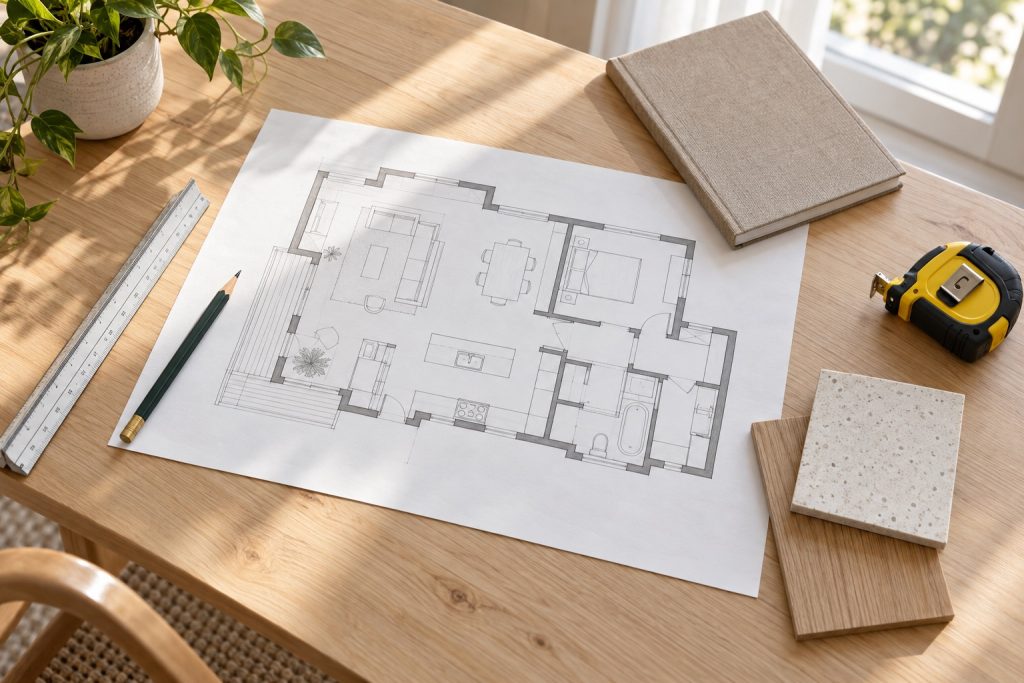
You do not need every finish selected before talking to a contractor. You do need a clear explanation of what you want to improve and enough information to have a useful conversation about possibilities.
Starting a home remodel becomes more manageable when you separate early planning from construction preparation. The first stage is about deciding what problem to solve, who should help, and what information is needed before the scope can be priced accurately.
Step 1: Write a short project brief
Describe the rooms involved and the main frustrations you want to fix. Include anything that must remain, such as a favorite floor, an existing appliance, or a room that cannot be disrupted during a particular period.
Keep the brief focused. “More usable kitchen storage and room for two people to cook” gives a clearer starting point than “make the kitchen nicer.” Attach a few inspiration images and explain what you like about each one.
Step 2: Separate needs from preferences
Create three groups: essential improvements, features you would like, and ideas that can wait. This helps when design options compete for space or money.
Agree within the household
Discuss the list with everyone who will make decisions. If one person values a larger shower and another prioritizes storage, identify that tradeoff early. Choose who will consolidate feedback so the project team receives consistent direction.
Step 3: Establish spending boundaries
Decide on a comfortable overall limit and identify expenses beyond construction, such as design, owner-purchased items, temporary living arrangements, or storage. Keep an allowance for uncertainty within the overall plan rather than assuming every dollar can go toward visible upgrades.
You do not need to invent a precise construction budget without professional input. Be prepared to discuss your boundaries honestly so the team can tell you whether the desired scope needs adjustment.

Step 4: Gather information about the home
Take clear photos and collect any existing plans, surveys, relevant repair records, and product information for items you want to retain. Describe known leaks, electrical concerns, or previous modifications.
For a Middlesex or Union County property, include the address when requesting a consultation so project fit and location can be confirmed. If records are missing, say so; the team can explain what needs to be measured or investigated.
Step 5: Discuss the planning process
Ask prospective contractors what happens between the first meeting and a construction agreement. Clarify design responsibilities, site evaluation, selections, pricing stages, and who confirms approval requirements.
Find out what the next deliverable will be and whether there is a fee for that stage. An early estimate based on limited information should not be mistaken for a fully defined construction proposal.

Step 6: Build a realistic decision schedule
Share important dates, but distinguish preferences from immovable constraints. Ask what must happen before construction can start and which decisions could affect the sequence.
Set aside time to review drawings, compare materials, and approve selections. Homeowner decisions are part of the schedule, too. Keep notes from each conversation in one place so questions do not disappear between meetings.
Begin with the essentials
Your first goal is a clear next step, not a rushed start date.
After the first meeting, write down what you understood and send any remaining questions through the agreed channel. A short recap can expose mismatched expectations before detailed planning begins.
Contact Ace Estates with your project brief, photos, and priorities to begin discussing your remodel and the planning work it needs.